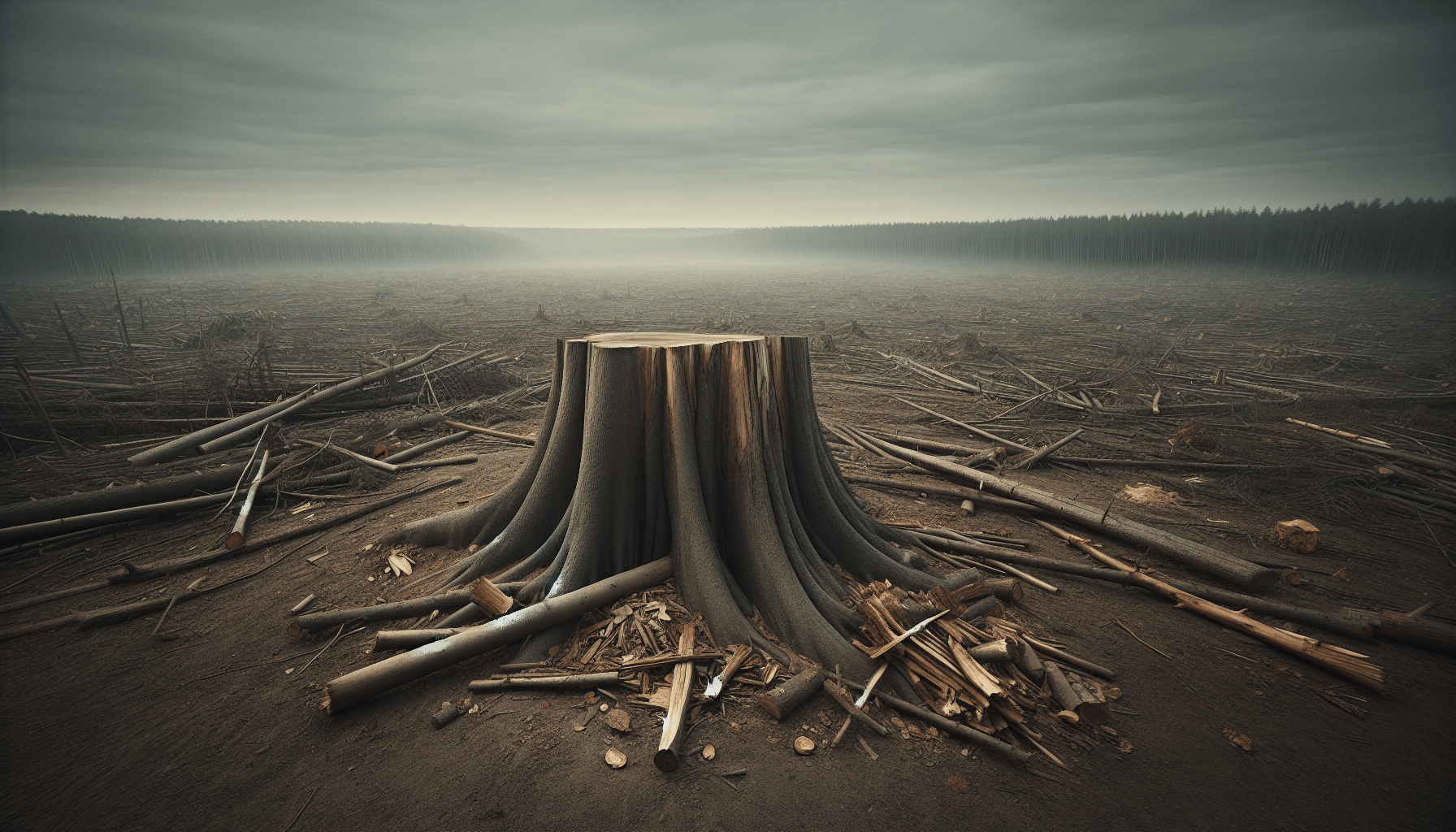
Have you ever wondered how the simple act of cutting down a tree can impact our entire planet? This question might seem straightforward, but the consequences are far-reaching and complex. Trees are not just a source of timber or paper; they are integral to our ecosystem and play a critical role in mitigating climate change. Yet, the practice of deforestation continues unabated in many parts of the world, further accelerating global warming.
Understanding the Basics: What is Deforestation?
Deforestation refers to the clearing, destroying, or otherwise removal of trees through deliberate, natural, or accidental means. It has significant implications for biodiversity, the global climate, and human health. Primarily, deforestation occurs to make space for agricultural activities, urban development, and logging. Let’s break this down further.
Causes of Deforestation
Understanding why deforestation happens is crucial in addressing the broader issue. The primary causes include:
-
Agricultural Expansion: Clearing forests for farming is one of the leading causes of deforestation. Whether it’s for crops or livestock, the need for more agricultural land fuels forest destruction.
-
Urban Development: As human populations grow, so does the need for housing, roads, and other infrastructure. This often comes at the expense of forests.
-
Logging: Timber extraction for the woodworking industry contributes significantly to forest loss. Even sustainable logging practices can lead to substantial deforestation.
-
Mining: Extractive activities necessitate clearing vast forest areas to access minerals, which has devastating effects on the ecosystem.
-
Climate Change: While deforestation drives climate change, it can also be a result of it. Increased temperatures and altered precipitation patterns can lead to forests becoming more prone to fires and other natural disasters.
Consequences of Deforestation
The impacts of deforestation stretch far beyond the immediate loss of trees. They include:
-
Loss of Biodiversity: Forests are home to a majority of the world’s terrestrial species. Destroying their habitat leads to the extinction of plants and animals.
-
Disruption of Water Cycles: Trees play a vital role in maintaining the water cycle. Removing them disrupts the natural process of evaporation, condensation, and precipitation.
-
Soil Erosion: Without tree roots to anchor it, soil becomes more susceptible to erosion, leading to reduced agricultural productivity and sedimentation of waterways.
-
Impact on Indigenous Communities: Many indigenous people depend on forests for their livelihoods. Deforestation threatens their way of life and can force them to relocate.
Deforestation and Global Warming: How Are They Connected?
The connection between deforestation and global warming is both direct and indirect. Let’s explore how this relationship works and why it is so crucial in today’s climate crisis.
The Role of Forests in Carbon Sequestration
One of the most critical functions of forests is carbon sequestration—the process by which trees absorb carbon dioxide (CO2) from the atmosphere during photosynthesis. This absorbed CO2 is stored in biomass (trunks, branches, leaves, and roots) and soil.
| Component | Carbon Storage Capacity |
|---|---|
| Above-ground Biomass | 80% |
| Soil | 15% |
| Dead wood, litter | 5% |
When trees are cut down, this stored carbon is released back into the atmosphere, contributing significantly to greenhouse gas emissions.
Deforestation’s Contribution to Greenhouse Gas Emissions
Forests act as carbon “sinks” that absorb more carbon than they emit. When trees are felled and often burned, they release carbon dioxide back into the atmosphere. According to studies, deforestation is responsible for about 10-15% of global greenhouse gas emissions, making it a significant factor in global warming.
Climate Feedback Loops
Deforestation can lead to feedback loops that exacerbate climate change. For instance, as forests are cleared, the local and global climate becomes warmer and drier. This, in turn, increases the likelihood of forest fires, which contribute even more carbon dioxide to the atmosphere. These feedback loops can create a vicious cycle that is difficult to break.

The Global Picture: Where is Deforestation Happening?
Deforestation is a global issue, but its impact varies from region to region. Some areas are more affected than others, and understanding these differences can inform better policy-making.
Amazon Rainforest
The Amazon is often referred to as the “lungs of the Earth” due to its capacity to generate a significant portion of the world’s oxygen. However, deforestation in the Amazon is a critical issue. According to various reports, the Amazon has lost approximately 17% of its forest cover in the last 50 years due to logging, mining, and agricultural expansion.
Southeast Asia
Countries like Indonesia and Malaysia are significant hotspots of deforestation, primarily due to palm oil plantations. Palm oil is found in many everyday products, from shampoos to snacks, and its cultivation requires extensive deforestation.
Central Africa
The Congo Basin in Central Africa is home to the world’s second-largest rainforest. Deforestation in this region is driven by logging, mining, and agriculture. Moreover, political instability and lack of governance exacerbate the challenge.
North America and Europe
Although deforestation rates in North America and Europe are lower compared to the Amazon or Southeast Asia, historical deforestation has already had lasting effects. Sustainable forestry practices have improved, but issues like urban sprawl and climate change still pose risks.
The Human Factor: Socio-Economic Dimensions
While the environmental aspects of deforestation are often in the spotlight, the socio-economic factors cannot be overlooked. These dimensions are crucial for developing holistic and sustainable solutions.
Economic Drivers
Deforestation is often driven by economic needs, particularly in developing countries. For many communities, cutting down trees is a necessary means for survival, whether for agriculture, fuel, or income. In such cases, the immediate economic benefits far outweigh the long-term environmental costs.
Health Impacts
Deforestation also has direct and indirect health impacts. For instance, it can contribute to the spread of diseases. When forests are cleared, disease vectors such as mosquitoes and ticks lose their habitats and come into closer contact with humans. Add to that, deforestation can reduce access to medicinal plants and clean water, further exacerbating health issues.
Social Inequality
The burden of deforestation often falls on the most vulnerable communities, including indigenous populations. These communities usually have little say in land-use decisions but face the most significant consequences, from loss of livelihoods to forced relocations.

Strategies for Mitigation: What Can Be Done?
Understanding the complexity of deforestation is the first step. The next is figuring out how to tackle it effectively. Here are several strategies that can help mitigate deforestation and its impact on global warming.
Legislative Measures
Policy and legislation can play significant roles in curbing deforestation. Governments can implement laws that limit land clearing and protect forested areas. Moreover, strict penalties for illegal logging and deforestation crimes can act as deterrents.
Sustainable Agriculture
Developing and adopting sustainable agricultural practices is crucial. Agroforestry, permaculture, and other sustainable farming methods can minimize the need for deforestation while still allowing agricultural productivity.
Reforestation and Afforestation
Replanting trees and developing new forests can help offset some of the impacts of deforestation. Reforestation refers to replanting trees in deforested areas, while afforestation involves planting trees in areas that historically have not been forested.
Corporate Responsibility
Corporations play a significant role in deforestation, particularly industries like logging, mining, and agriculture. Holding companies accountable through ethical sourcing and environmentally friendly practices can significantly reduce deforestation rates.
Public Awareness and Education
Educating the public about the consequences of deforestation and the importance of forests can lead to more responsible consumer choices. Campaigns and programs that highlight how everyday products contribute to deforestation can create a more informed and proactive public.
Technological Solutions
Leveraging technology can also aid in combating deforestation. Satellite monitoring, drones, and other advanced tools can help track illegal logging and provide crucial data for forest management.
Case Studies: Examples of Success and Challenges
Examining case studies can offer insights into what works and what doesn’t in the fight against deforestation. Below are some examples.
Success Story: Costa Rica
Costa Rica has made significant strides in reversing deforestation. Through policy reforms, incentives for private landowners to conserve forests, and ecotourism, the country managed to increase its forest cover from 21% in the 1980s to more than 50% today.
Challenge: The Amazon Rainforest
Despite numerous efforts to reduce deforestation in the Amazon, challenges persist. Political instability, corruption, and economic pressures continue to drive deforestation at alarming rates. International cooperation and robust policies are crucial for any meaningful change.
Innovative Techniques: Norway’s Satellite Monitoring
Norway has launched an innovative satellite monitoring system to track deforestation in real-time. This technology enables quicker and more effective responses to illegal logging, offering a possible model for other countries to follow.

The Way Forward: An Integrated Approach
Addressing the issue of deforestation and its link to global warming requires a multifaceted approach. Environmental, socio-economic, and technological factors should all be considered in developing holistic solutions.
International Cooperation
Global problems require global solutions. International treaties and agreements, like the Paris Agreement, aim to address climate change comprehensively, including deforestation. Countries need to collaborate more closely, sharing resources, technology, and knowledge to combat this issue effectively.
Holistic Policy Frameworks
Policies addressing deforestation should be integrated with broader climate action plans. This includes aligning forest conservation with economic development, healthcare, and educational initiatives to ensure that the needs of all stakeholders are met.
Continuous Research and Innovation
Ongoing research into the causes, effects, and solutions for deforestation is vital. Innovation in sustainable practices, new technologies for monitoring, and policies can provide the tools needed to effectively manage and protect our forests.
Community Involvement
The people most affected by deforestation—often indigenous and local communities—should be at the forefront of conservation efforts. Their traditional knowledge and vested interest in maintaining forest health make them invaluable allies.
Conclusion
The act of felling forests may seem isolated or even necessary for economic development, but its implications for global warming and environmental health are profound. Trees are more than just a resource; they are a critical component of our planet’s ability to regulate climate and support diverse ecosystems.
By understanding the causes, effects, and potential solutions for deforestation, you can play a part in advocating for and implementing changes. From supporting companies that prioritize sustainable practices to advocating for stronger environmental policies, every action counts. The fight against deforestation and global warming is interconnected, and our collective efforts can make a significant difference.