Plankton blooms are fascinating phenomena that occur in aquatic environments, characterized by a rapid increase in the population of plankton, particularly phytoplankton. These microscopic organisms form the foundation of the marine food web, serving as a primary food source for a variety of marine life, from tiny zooplankton to large whales. When conditions are right—such as an abundance of nutrients, sunlight, and favorable temperatures—these organisms can multiply exponentially, leading to what is known as a bloom.
While these events can be natural and beneficial, they can also have detrimental effects on marine ecosystems and human activities, particularly when harmful algal blooms (HABs) occur. Understanding the dynamics of plankton blooms is crucial for several reasons. They play a significant role in carbon cycling and oxygen production, influencing global climate patterns.
Additionally, blooms can impact fisheries, tourism, and water quality, making it essential to monitor their occurrence and behavior. As you delve deeper into the world of plankton blooms, you will discover the intricate balance between their ecological benefits and potential hazards, highlighting the need for effective monitoring and management strategies.
Key Takeaways
- Plankton blooms are rapid increases in the population of phytoplankton, which are microscopic marine plants, and are a crucial part of the ocean’s food web.
- Monitoring plankton blooms from space is important for understanding the health of marine ecosystems, as well as for predicting and managing harmful algal blooms.
- Techniques for detecting and analyzing plankton blooms from space include satellite remote sensing, which allows for the measurement of chlorophyll concentration and sea surface temperature.
- Understanding the language of plankton blooms involves interpreting satellite data to identify different types of phytoplankton and their distribution patterns.
- Challenges and limitations of monitoring plankton blooms from space include cloud cover, limitations in spatial and temporal resolution, and the need for ground truth data for validation.
Importance of Monitoring Plankton Blooms from Space
Monitoring plankton blooms from space has become increasingly important in recent years due to the growing concerns about ocean health and climate change. Traditional methods of monitoring these blooms often involve time-consuming and labor-intensive fieldwork, which can be limited in scope and frequency. In contrast, satellite technology offers a comprehensive view of vast oceanic regions, allowing for real-time monitoring of plankton dynamics across large areas.
This capability is particularly valuable in understanding the spatial and temporal patterns of blooms, which can vary significantly based on environmental conditions. By utilizing satellite data, researchers can track changes in chlorophyll concentrations, sea surface temperatures, and nutrient levels—all critical factors influencing plankton growth. This information not only aids in predicting bloom events but also helps in assessing their potential impacts on marine ecosystems and human activities.
As you explore the significance of satellite monitoring, you will appreciate how this technology enhances our understanding of ocean health and informs decision-making processes related to fisheries management, water quality assessments, and climate change mitigation.
Techniques for Detecting and Analyzing Plankton Blooms from Space
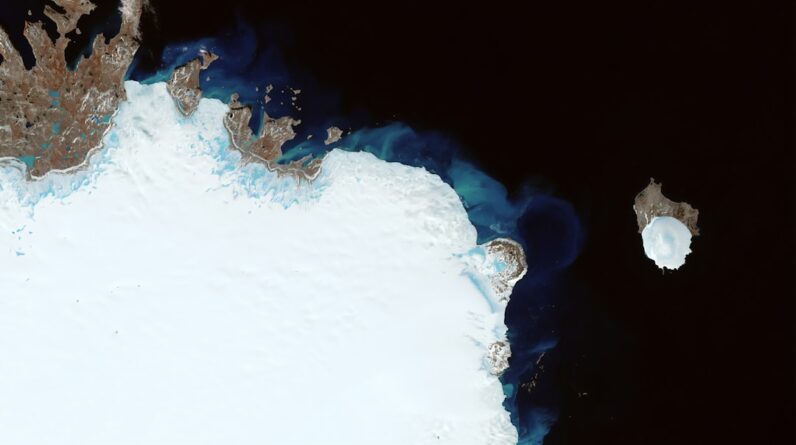
The detection and analysis of plankton blooms from space rely on various remote sensing techniques that harness the power of satellite imagery. One of the primary methods involves measuring chlorophyll-a concentrations using ocean color satellites. These satellites capture data on the light reflected from the ocean’s surface, which varies based on the presence of chlorophyll—a pigment found in phytoplankton.
By analyzing this data, scientists can estimate the abundance and distribution of phytoplankton populations, providing valuable insights into bloom dynamics. In addition to chlorophyll measurements, other techniques such as thermal infrared sensing and synthetic aperture radar (SAR) are employed to gather complementary information about ocean conditions. Thermal infrared sensors can detect temperature variations that may indicate nutrient upwelling or stratification, while SAR can provide data on surface roughness and currents that influence bloom formation.
By integrating these diverse datasets, you can gain a more comprehensive understanding of the factors driving plankton blooms and their potential impacts on marine ecosystems.
Understanding the Language of Plankton Blooms
To fully grasp the implications of plankton blooms, it is essential to understand their “language”—the various signals and indicators that reveal their behavior and impact on marine environments. For instance, changes in bloom timing, duration, and intensity can provide critical insights into shifts in ocean conditions and climate change effects. By analyzing historical data alongside current observations, researchers can identify trends that may indicate broader ecological shifts.
Moreover, the composition of plankton communities during blooms can also convey important information about ecosystem health. Different species of phytoplankton respond uniquely to environmental changes; some may thrive under nutrient-rich conditions while others may be more sensitive to temperature fluctuations. By studying these community dynamics, you can better understand how changes in ocean chemistry and temperature may affect marine food webs and overall ecosystem resilience.
Challenges and Limitations of Monitoring Plankton Blooms from Space
Despite the advancements in satellite technology for monitoring plankton blooms, several challenges and limitations persist. One significant hurdle is the resolution of satellite imagery. While satellites can cover vast areas, their spatial resolution may not always be sufficient to capture localized blooms or small-scale variations in plankton distribution.
This limitation can hinder efforts to accurately assess bloom dynamics in coastal regions or areas with complex topography. Additionally, atmospheric conditions such as cloud cover can obstruct satellite observations, leading to gaps in data collection. These interruptions can complicate efforts to establish consistent monitoring programs and may result in incomplete or inaccurate assessments of bloom events.
As you consider these challenges, it becomes clear that while satellite monitoring is a powerful tool, it must be complemented by ground-based observations and modeling efforts to provide a more holistic understanding of plankton dynamics.
Implications for Climate Change and Ecosystem Health

The implications of monitoring plankton blooms extend far beyond immediate ecological concerns; they are intricately linked to broader issues such as climate change and ecosystem health. As ocean temperatures rise due to global warming, shifts in plankton community composition and distribution are expected to occur. These changes can have cascading effects throughout marine food webs, potentially disrupting fisheries and altering nutrient cycling processes.
Furthermore, harmful algal blooms (HABs) pose significant risks to both marine life and human health. These toxic blooms can lead to fish kills, shellfish poisoning, and detrimental impacts on coastal economies reliant on tourism and fishing industries. By monitoring plankton blooms from space, you can contribute to early warning systems that help mitigate these risks and protect both marine ecosystems and human communities.
Future Directions in Satellite Monitoring of Plankton Blooms
As technology continues to advance, the future of satellite monitoring for plankton blooms looks promising. Emerging satellite missions are set to enhance our ability to detect and analyze these phenomena with greater precision. For instance, next-generation sensors with improved spectral capabilities will allow for more accurate assessments of phytoplankton diversity and biomass.
Moreover, integrating artificial intelligence (AI) and machine learning algorithms into data analysis processes holds great potential for improving bloom prediction models. By harnessing vast datasets from multiple sources—satellite imagery, oceanographic buoys, and climate models—you can develop more robust predictive tools that inform management strategies for fisheries and coastal ecosystems. Collaboration among scientists, policymakers, and technology developers will be crucial in advancing these efforts.
By fostering interdisciplinary partnerships, you can ensure that satellite monitoring initiatives are effectively translated into actionable insights that promote sustainable ocean management practices.
Harnessing the Power of Space Technology for Ocean Conservation
In conclusion, the monitoring of plankton blooms from space represents a vital intersection between technology and environmental stewardship. As you have explored throughout this article, understanding these phenomena is essential for maintaining healthy marine ecosystems and addressing the challenges posed by climate change. The ability to monitor blooms on a global scale provides invaluable insights that inform conservation efforts and support sustainable practices in fisheries management.
As we look to the future, harnessing the power of space technology will be key to advancing our understanding of ocean health. By embracing innovative approaches to satellite monitoring and fostering collaboration across disciplines, you can contribute to a more sustainable future for our oceans. The journey toward effective ocean conservation is ongoing, but with continued advancements in technology and a commitment to research, we can work together to protect these vital ecosystems for generations to come.
In addition to studying plankton blooms from space, researchers are also exploring the benefits of planting trees for the environment. A related article discusses how planting trees can help combat global warming and deforestation. To learn more about the importance of tree planting, check out How Does Planting Trees Help the Environment? and How Does Planting Trees Help Deforestation?.
FAQs
What are plankton blooms?
Plankton blooms are rapid increases in the population of phytoplankton or zooplankton in a body of water. These blooms can occur in both freshwater and marine environments.
Why are plankton blooms important?
Plankton are at the base of the marine food web and play a crucial role in the ocean’s ecosystem. They are also responsible for producing a significant portion of the Earth’s oxygen through photosynthesis.
How can plankton blooms be observed from space?
Plankton blooms can be observed from space using satellite imagery. Scientists use specific wavelengths of light to detect chlorophyll-a, a pigment found in phytoplankton, which allows them to track the presence and movement of plankton blooms.
What information can be gained from decoding the language of plankton blooms from space?
Decoding the language of plankton blooms from space can provide valuable information about the health of marine ecosystems, the impact of climate change, and the potential for harmful algal blooms. It can also help in fisheries management and understanding carbon cycling in the ocean.
How do plankton blooms impact the environment?
Plankton blooms can have both positive and negative impacts on the environment. They are a vital food source for many marine organisms, but excessive blooms can lead to oxygen depletion and the production of harmful toxins, which can be detrimental to marine life.